Key Takeaways
- Get inside before you clean. Ready.gov’s protective action is to get inside, stay inside, and stay tuned. Ready.gov source
- Carefully remove outer clothing. CDC says this can remove up to 90% of radioactive material. CDC source
- Bag clothing and used cleaning materials. Keep the sealed bag far away from people and pets. CDC source
- Wash gently with soap and warm water. Do not scald, scrub, or scratch skin. CDC source
- Tap water can be used for washing. CDC says it can be used for decontamination even when bottled water is preferred for drinking. CDC source
What Is Nuclear Decontamination?
Nuclear decontamination is the removal of radioactive material from a person, object, or place after a radiation emergency. CDC explains that removing this material lowers exposure to harmful radioactive particles that may be on skin, hair, clothing, or belongings. It is a practical action for contamination; it does not reverse radiation exposure that has already occurred. CDC source
The sequence matters. If the hazard is outside, first get inside and away from windows. Then remove potential contamination in a controlled way before touching food, water, indoor surfaces, or other people. Ready.gov summarizes the larger protective action as: get inside, stay inside, and stay tuned. Ready.gov source
Use local emergency instructions first
This guide summarizes general public guidance. Follow instructions from local emergency management, public-health agencies, or first responders for your specific location, especially if they direct evacuation, medical evaluation, or specialized cleanup.
First: Get Inside and Avoid Spreading Dust
The first minutes after a possible radiological release are about moving into a protective indoor space and limiting the transfer of particles. Ready.gov says to get inside the nearest building, move away from windows, and put as many walls between you and the outside as practical. If you think material may be on you, avoid touching your eyes, nose, and mouth while you remove outer clothing. Ready.gov source
Do not delay sheltering to search for specialized supplies. A clean indoor transition area, ordinary soap, water, clean cloths, and a sealable bag are more useful than improvised chemicals. See our nuclear fallout shelter guide for the broader first-day sheltering plan.
Step 1: Remove Outer Clothing Carefully
Removing the outer layer of clothing is the single highest-impact public decontamination step because it can remove up to 90% of radioactive material. CDC instructs people to take off the outer layer carefully to avoid inhaling radioactive dust released by shaking clothing. CDC source
Place clothing in a plastic bag or another sealable container and put it far away from people and pets. This is not a recommendation to wash the garments or begin major household cleaning; it is a simple containment action while you wait for official direction. CDC source
Step 2: Wash Yourself Safely
Washing safely means gently removing particles from exposed skin and hair without damaging the skin barrier or driving contamination into cuts. If a shower is available, CDC says to take a warm shower and gently wash yourself with lots of soap. Do not scald, scrub, or scratch your skin; wash hair with shampoo or soap and keep cuts and abrasions covered while washing. CDC source
Tap water can still be used for washing skin, hair, and clothing for decontamination even when public-health officials recommend bottled water for drinking. CDC explains that contamination in water sources is diluted when it mixes with clean water, reducing radioactive contamination to very low levels for washing purposes. CDC source
If You Cannot Take a Shower
When a shower is unavailable, CDC recommends cleaning the exposed parts of the body first with soap and plenty of water or with a clean damp material. At a sink or faucet, wash hands, face, and any part of the body that was not covered. If there is no sink or faucet, use a moist wipe, clean wet cloth, or damp paper towel and pay special attention to hands and face. CDC source
CDC also advises gently blowing your nose and wiping eyelids, eyelashes, and ears with a moist wipe, clean wet cloth, or damp paper towel. Put used wipes, cloths, and towels into a plastic bag or sealable container, then keep the bag away from people and pets. CDC source
Pets, Belongings, and Protecting the Indoor Space
Protecting the indoor space means preventing material on pets, clothing, and cleaning supplies from moving onto people, food, water, and frequently touched surfaces. Ready.gov says pets and service animals should remain inside when people are told to shelter. If an animal was outside after radioactive dust arrived, gently brush its coat to remove particles and wash it with soap and water if available. Ready.gov source
Keep sealed bags containing outer clothing and used cleaning materials away from people and pets. Before handling food, drinking water, dishes, or medication, complete personal cleaning and wash hands. For the food-and-water decisions that follow, use our Nuclear Fallout Food Safety guide; it explains which sealed or indoor items CDC considers safe and why boiling water does not remove radioactive material.
Broader building cleanup depends on the incident and local conditions. Do not use general online advice as a substitute for instructions from emergency officials about your specific home, neighborhood, or belongings.
What Not to Do
Safe decontamination avoids actions that can damage skin, spread particles, or create a false sense of protection. Ready.gov says not to use household cleaning wipes on skin and states that hand sanitizer does not protect against radioactive material. CDC says not to scald, scrub, or scratch skin during washing. Ready.gov source · CDC source
| Action | Official guidance | Reason |
|---|---|---|
| Carefully remove outer clothing | Do it | CDC says it can remove up to 90% of radioactive material. CDC |
| Use a warm shower and soap | Do it when available | Wash gently; do not scald, scrub, or scratch skin. CDC |
| Use a clean damp cloth when no water is available | Do it | CDC lists a moist wipe, clean wet cloth, or damp paper towel as alternatives. CDC |
| Use household cleaning wipes on skin | Do not do it | Ready.gov explicitly advises against it. Ready.gov |
| Rely on hand sanitizer | Do not do it | Ready.gov states that hand sanitizer does not protect against radioactive material. Ready.gov |
What to Keep in a Decontamination-Ready Kit
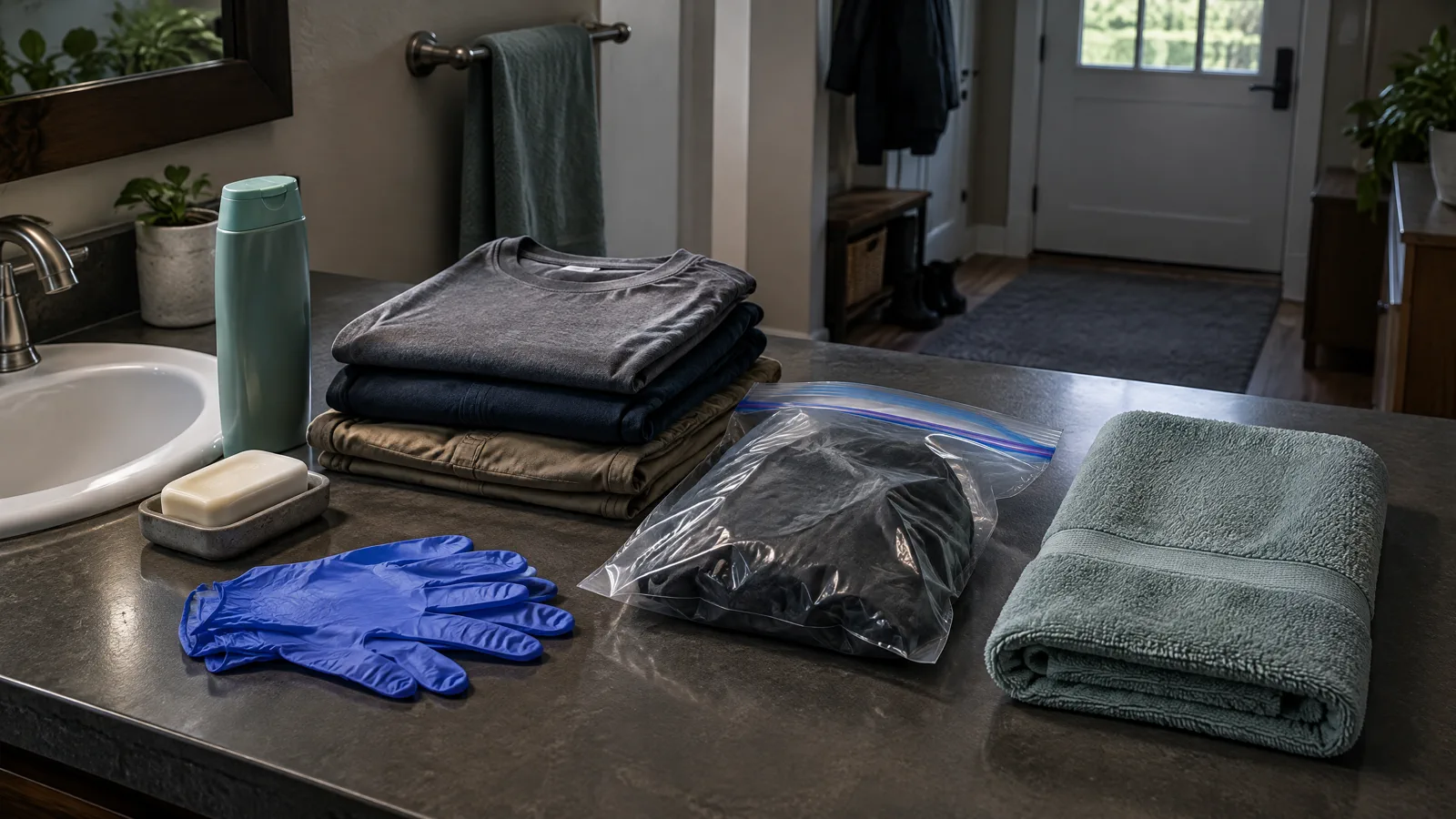
A decontamination-ready kit contains simple supplies that let a household transition from outside to a protected indoor space without spreading dust. Ready.gov recommends an emergency supply kit that includes a spare change of clothes for each family member, a trash bag for contaminated clothing, and sealed food, water, and medicine. Ready.gov source
Use our nuclear emergency kit guide for the broader supply checklist and our fallout water purification guide for the critical distinction between water for washing and water for drinking.
Frequently Asked Questions
CDC defines decontamination as removing radioactive material from a person, object, or place. It lowers exposure to harmful radioactive material that may be on skin, hair, clothing, or belongings. CDC source
CDC says carefully removing the outer layer of clothing can remove up to 90% of radioactive material. Put the clothing in a plastic bag or another sealable container and keep it away from people and pets. CDC source
CDC says to take a warm shower and gently wash with lots of soap when a shower is available. Do not scald, scrub, or scratch skin; wash hair with shampoo or soap and keep cuts or abrasions covered. CDC source
Yes. CDC says tap water can still be used to wash skin, hair, and clothing for decontamination even if public-health officials recommend bottled water for drinking. CDC source
No. Ready.gov states that hand sanitizer does not protect against radioactive material. Use soap and water when possible, or a moist wipe, clean wet cloth, or damp paper towel if water is unavailable. Ready.gov source
Primary Sources & References
- Centers for Disease Control and Prevention. How to Self-Decontaminate after a Radiation Emergency. cdc.gov/radiation-emergencies/prevention/self-decontaminate.html
- Ready.gov / U.S. Department of Homeland Security. Radiation Emergencies. ready.gov/radiation
- Centers for Disease Control and Prevention. Food, Drinking Water, and Medicine Safety in a Radiation Emergency. cdc.gov/radiation-emergencies/safety/food-drinking-water-medicine-safety.html